


Early Intervention for Autism: How to Get the Right Support for Your Toddler

Toddler boy engages with small toy figures on a table while a therapist guides him during an early intervention for autism in a clinic with a chalkboard behind them

Table of Contents

How Do I Get Early Intervention for Autism?

Hearing that your toddler may have autism or receiving a confirmed diagnosis often answers one important question while creating many others.

Parents who have spent months wondering why their child is not talking, avoids eye contact, struggles with changes in routine, or seems to develop differently than other children suddenly find themselves facing an entirely new vocabulary. Developmental evaluations, autism screenings, ABA therapy, speech therapy, occupational therapy, Board Certified Behavior Analysts… it can feel like learning a new language overnight.

Then comes one of the most important questions of all: How do I get early intervention for autism?

Many families assume there is a single program they enroll in. In reality, early intervention is a process that begins with recognizing developmental concerns and continues with evaluation, individualized recommendations, and therapies tailored to each child’s strengths and needs.

The encouraging news is that today’s healthcare providers recognize autism much earlier than they did years ago. According to the Centers for Disease Control and Prevention (CDC), approximately 1 in 31 children is identified with autism spectrum disorder, and many children can receive a reliable diagnosis by 18 to 24 months when evaluated by experienced clinicians. Earlier recognition means children can access support during one of the most important periods of brain development.

In this blog by ABA Centers of Ohio, we’ll explain what early intervention for autism really means, how families typically access services, what early intervention ABA involves, why timing matters, and how early autism therapy can help toddlers build foundational skills for everyday life.

What is Early Intervention for Autism?

Many parents assume that early intervention for autism refers to a single therapy. In reality, it describes a coordinated group of services designed to support young children who are experiencing developmental delays or who have been diagnosed with autism spectrum disorder.

Every child’s needs are different, so early intervention rarely looks the same from one family to another.

Some toddlers primarily need help developing communication skills. Others may benefit from support with social interaction, emotional regulation, sensory processing, or daily routines. For this reason, early intervention often brings together professionals from different specialties who work toward shared developmental goals.

Depending on a child’s evaluation, recommendations may include early autism therapy such as:

  • Applied Behavior Analysis (ABA)
  • Speech-language therapy
  • Occupational therapy
  • Developmental or behavioral pediatric care
  • Parent coaching and caregiver education

Rather than working independently, these providers often collaborate to support the child’s overall development. Each professional contributes a different perspective, creating a more comprehensive understanding of the child’s strengths and challenges.

This collaborative approach is one reason early intervention for autism has become such an important part of autism care. Instead of waiting until children enter school, developmental concerns can be addressed while foundational skills are still emerging.

How Families Typically Access Early Intervention Services

One reason parents often feel overwhelmed is that no one explains what happens after developmental concerns arise.

Although every family follows a slightly different path, the process usually unfolds in several stages.

Step 1: Talk With Your Pediatrician

Most journeys begin during a well-child visit or after parents share concerns about communication, behavior, or developmental milestones.

Your pediatrician may complete developmental surveillance, administer autism screening tools, or recommend additional evaluation if concerns persist.

Even if your child has not yet received a diagnosis, sharing your concerns early can help initiate the referral process.

Step 2: Complete a Comprehensive Evaluation

If screening suggests additional assessment is appropriate, families are referred to specialists experienced in diagnosing developmental conditions.

Depending on the provider, the evaluation may include developmental pediatricians, psychologists, neurologists, or multidisciplinary autism diagnostic teams.

Step 3: Review Individualized Recommendations

Parents hold their toddler while discussing autism concerns with a pediatrician in a clinic office

Not every child leaves an evaluation with the same recommendations. Some children benefit primarily from speech therapy. Others may receive recommendations for occupational therapy, early intervention ABA, or a combination of services.

The purpose of the evaluation is not simply to assign a diagnosis. It is to identify which supports are most likely to help that particular child.

Step 4: Connect With Therapy Providers

Once recommendations have been made, families begin contacting providers, verifying insurance coverage, completing intake paperwork, and scheduling initial assessments.

If ABA therapy is recommended, a Board Certified Behavior Analyst (BCBA) completes a more detailed behavioral assessment before creating an individualized treatment plan.

This assessment looks beyond diagnosis alone. It identifies the child’s current communication, play, and daily living skills, strengths, interests, and family priorities, so that treatment goals reflect real-life needs.

Why Specialists Encourage Early Intervention

Parents sometimes wonder whether beginning therapy at such a young age is truly necessary.

Could waiting another six months make a difference? Current research suggests that it can.

The first few years of life are among the most dynamic periods of brain development, according to research. During this time, the brain continuously builds and strengthens neural connections in response to experiences, relationships, and learning opportunities.

This ability to adapt is known as neuroplasticity. While the brain remains capable of learning throughout life, early childhood offers unique opportunities to strengthen foundational skills in communication, attention, emotional regulation, play, and social interaction, according to the NICHD.

This is why developmental specialists often recommend beginning services as soon as meaningful delays are identified rather than waiting to see whether concerns resolve on their own.

Early intervention for autism does not promise identical outcomes for every child, nor is it intended to change who a child is. Instead, it provides structured opportunities to build skills that support greater independence and participation in everyday activities.
What Does Early Intervention ABA Look Like for Toddlers?

One of the biggest surprises for parents is discovering that early intervention ABA rarely looks the way they imagined.

Many people picture a therapist sitting across from a child at a table, asking questions or having them complete repetitive tasks. While structured teaching may be appropriate for some goals, that is not how most toddlers spend the majority of their sessions.

Young children learn through exploration, movement, routines, and relationships. For that reason, early intervention ABA is designed to meet toddlers where they naturally learn.

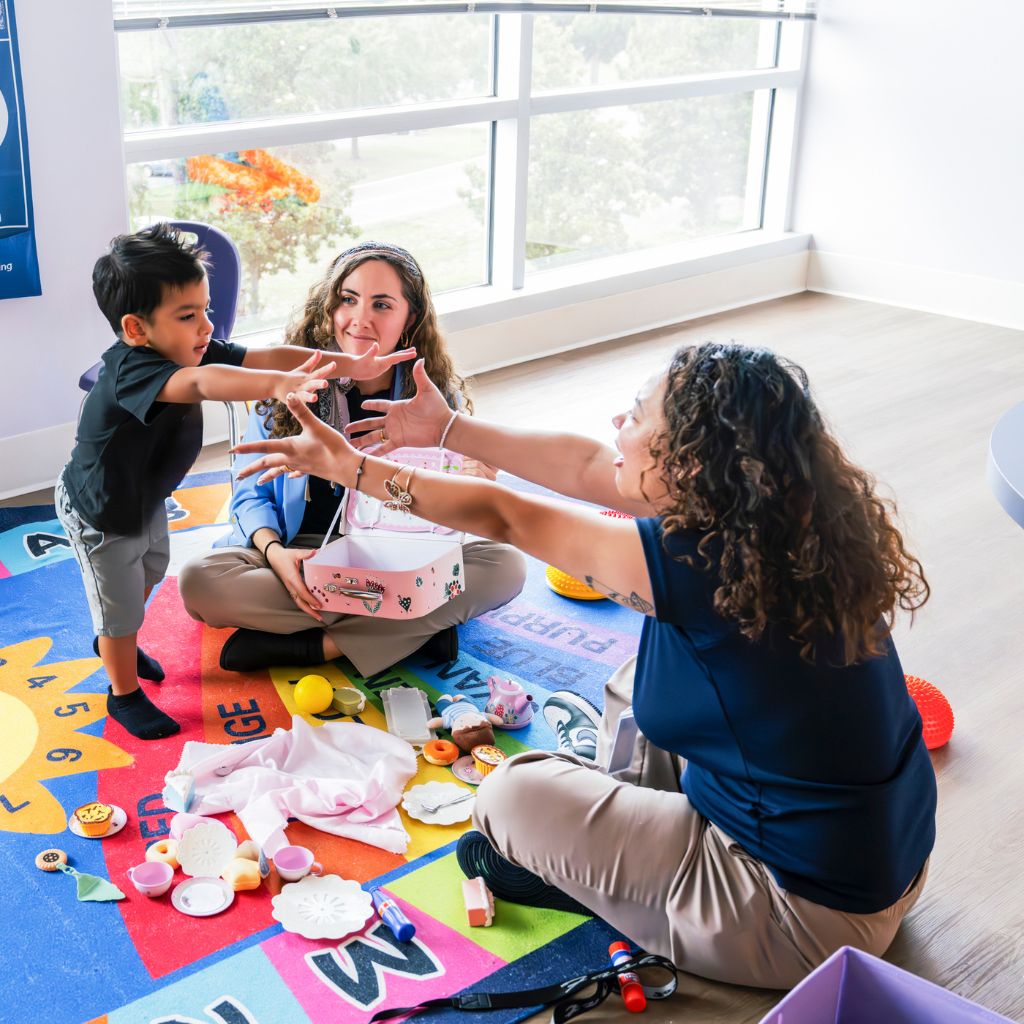
A typical play-based ABA therapy session may begin simply by allowing the therapist to reconnect with the child through preferred activities. Depending on the child’s interests, that might include bubbles, toy animals, building blocks, puzzles, books, music, pretend kitchens, or outdoor play. Every activity has a purpose.

ABA therapists engaging a young boy in a play-based therapy session on a colorful mat

While the child plays, the ABA professional is creating opportunities to teach meaningful developmental skills. Blowing bubbles may become an opportunity to encourage requesting or making choices. A favorite puzzle may help build joint attention and turn-taking. Snack time becomes a chance to practice communication, waiting, and following simple directions. Even cleaning up toys provides opportunities to work on transitions and flexibility.

Throughout the session, the therapist collects objective data on each goal. That information is reviewed regularly by the supervising BCBA, who adjusts the treatment plan based on the child’s progress.

To parents watching from across the room, it often looks like two people playing together.

Behind the scenes, however, every interaction is guided by clinical goals, evidence-based teaching strategies, and ongoing progress monitoring.

What Skills Does Early Autism Therapy Focus On?

Every child enters therapy with different strengths and challenges, so no two treatment plans are exactly alike. Still, early autism therapy often begins by strengthening the foundational skills that support learning across all areas of development.

1. Functional Communication

Communication is usually a priority because it influences nearly every part of a toddler’s day.

For some children, this means learning to use spoken words. For others, it may involve gestures, signs, pictures, or another form of communication. The goal is not simply to increase vocabulary but to help children communicate their wants, needs, choices, and feelings in ways that reduce frustration and increase independence.

2. Social Interaction

Toddlers are naturally developing social skills long before they begin school. During therapy, children practice responding to their name, sharing attention with others, taking turns, imitating actions, and participating in simple back-and-forth interactions.

These early social experiences help create the foundation for later friendships, classroom participation, and family interactions.

3. Play Skills

Play is much more than entertainment during early childhood.

It is one of the primary ways children explore their environment, solve problems, practice communication, and learn how to interact with others.

Some toddlers with autism engage in repetitive play or have difficulty expanding beyond a few preferred activities. Early intervention helps broaden play skills while respecting the child’s interests and developmental level.

4. Daily Living Skills

Many therapy goals focus on everyday routines that families experience at home.

Children may practice following simple routines, washing hands, feeding themselves, transitioning between activities, tolerating grooming tasks, or learning important safety skills such as stopping when an adult says “wait.”

Parents Are Part of the Therapy Team

Parents and their toddler daughter smile while playing together with wooden developmental toys at a table, illustrating the role of parents in ABA therapy

Although therapists provide direct intervention, children spend far more time with their families than they do in scheduled therapy sessions.

For that reason, parent participation is considered one of the most valuable components of early intervention for autism.

Parents are not expected to become therapists or memorize behavioral terminology. Instead, they learn practical strategies that naturally fit into everyday routines.

A BCBA may demonstrate ways to encourage communication during meals, create opportunities for social interaction while playing, support smoother bedtime routines, or reinforce newly learned skills throughout the day.

These small moments matter because toddlers learn through repetition and consistency. When the same communication strategies are practiced during therapy, at home, and in other familiar environments, children have more opportunities to generalize what they are learning into everyday life.


Common Questions Parents Have About Early Intervention for Autism

Can my child begin therapy before receiving an autism diagnosis?

In some situations, yes. If developmental delays are already evident, children may qualify for intervention services while additional evaluations are being completed. Recommendations vary depending on insurance requirements and state programs, but families should speak with their pediatrician or evaluation team rather than waiting if concerns persist.

Is my toddler too young for ABA?

Many children begin services between 18 months and 3 years of age. The decision is based on developmental needs rather than age alone.

How many hours of therapy will my child need?

There is no universal recommendation. Some children benefit from fewer hours combined with speech or occupational therapy, while others require more comprehensive support. The number of hours is determined by a BCBA after a clinical assessment and should always reflect the child’s individual needs and family circumstances.

Many early intervention programs for children with autism recommend between 10 and 40 hours of therapy per week, depending on each child’s individual needs and goals.

Will my child still have time to be a child?

Absolutely. Young children learn through play, exploration, movement, and relationships. High-quality early autism therapy incorporates these experiences rather than replacing them.

Helping Families Build Strong Foundations at ABA Centers of Ohio

Every family begins this journey from a different place. Some parents contact us after a pediatrician raises developmental concerns. Others reach out following a comprehensive autism evaluation, while many want to understand whether their toddler could benefit from additional support.

At ABA Centers of Ohio, we help families move from uncertainty to a personalized plan grounded in evidence and compassion. Our team provides comprehensive autism evaluations, individualized early intervention ABA programs, ongoing supervision, and parent collaboration that supports learning beyond therapy sessions.

The earliest years of childhood offer countless opportunities for growth. When children receive the right support during this important stage of development, they can build communication, social, play, and daily living skills that continue to benefit them as they grow.

If you have concerns about your toddler’s development or would like to learn more about early intervention for autism, our team is here to answer your questions, explain the evaluation process, and help you determine the next steps that are right for your family. Call us at (740) 747-6444 or schedule a free consultation here.

Discover how our autism treatment services can help you.

Get Social With Us

Related Posts

Scroll to Top